It’s a known fact that Filipinos everywhere in the world love to celebrate and get together. Just take a look at this long list of festivals in the Philippines. With that being just a partial list, we wouldn’t be surprised if there’s at least one fiesta or festival in a town somewhere in the country on any given day of the year.
Lasting anywhere between a day to an entire month, Philippine festivals are huge cultural celebrations that attract both local and foreign tourists due to its colorful and festive nature.
Because of Spain’s Catholic influence dating back to the mid-1500s, most of these festivals are usually religious in nature while others are meant to commemorate important events in history. Either way, attending a Philippine festival is definitely something you have to experience at least once.
Since there’s usually a festival going on each month, timing isn’t going to be a problem. If you’re looking for Philippine festivals to attend, here’s a chronological list of 10 popular ones to give you an idea of which ones to visit.
Sinulog Festival
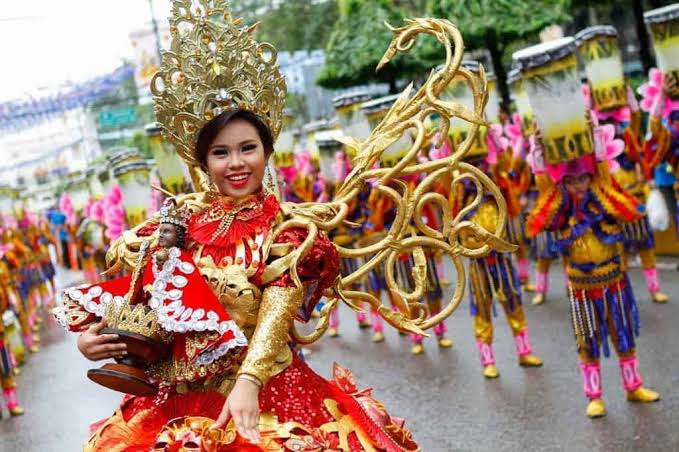
Sinulog Festival is annually celebrated for cultural and religious purposes. This event is celebrated in other parts of the country where the local government arranges the festival. The event will consist of a street party, dancing, and performing locals in traditional costumes. The Catholic Santo Niño is the centre of this celebration, but the Sinulog dance ritual also commemorates the Filipinos’ pagan past, along with their acceptance of Christianity.
Ati-atihan Festival
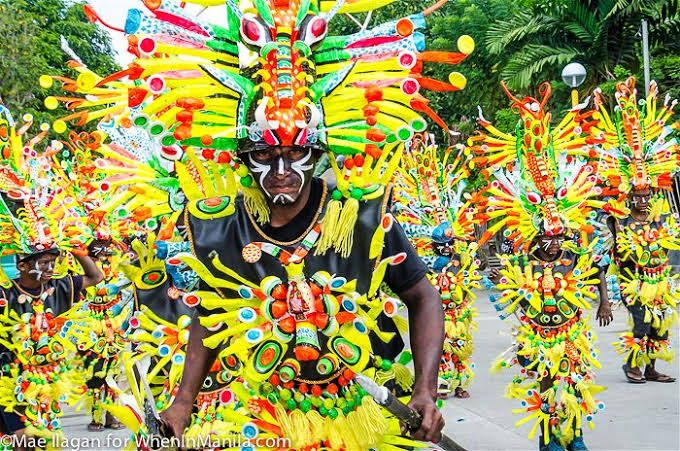
Another celebration to honour the Santo Niño, Ati-Atihan is where people go to the streets parading their traditional costumes and weapons, and painting their bodies black. Participants march and dance in the town, matched with loud drumbeats. This festival will definitely make you dance your heart out while enjoying a true Filipino atmosphere.
Dinagyang Festival
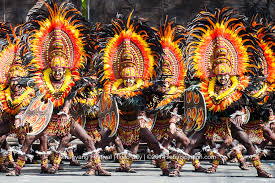
Dinagyang Festival is one of the largest festivals in the country. It’s when Iloilo takes the street festivals to the next level. The city converts all its streets into a massive open-air festival and everyone is invited. Mouthwatering local dishes are overflowing whilst there are bands playing in every alley you turn to. Every barangay and school will come together and have an extravagant dance competition.
Panagbenga Festival
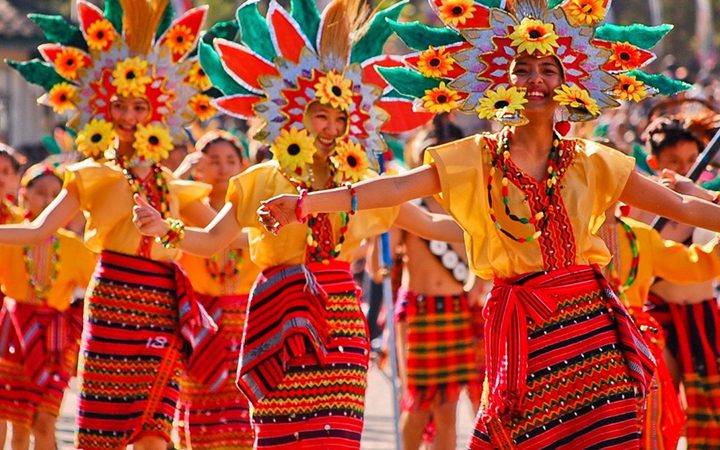
One of longest festivals in the Philippines, Panagbenga is celebrated throughout the month of February. This month highlights the season of blooming flowers, at the same time, this is also to commemorate our rise from the disastrous 1990 earthquake in Luzon. Marvellous floats, designed with various types of flowers, conquer the streets of Baguio City. Tourists can expect street dancing by dancers wearing flower-inspired costumes. Expect it to be even colder in Baguio when you visit as this festival is celebrated in February.
Moriones Festival
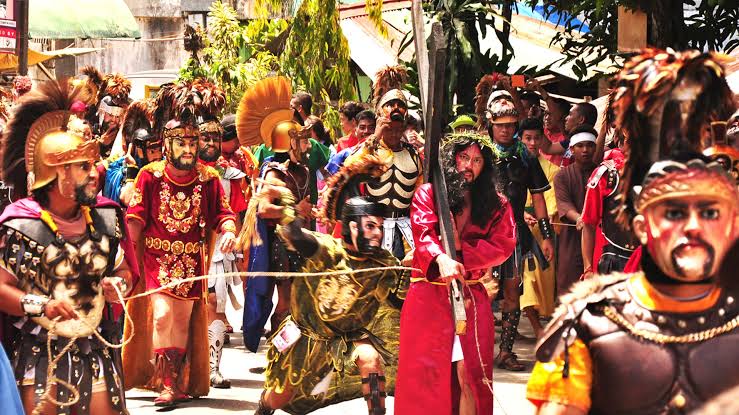
This is a festival that lasts for a week in Marinduque. Moriones is the celebration of the life of St. Longinus whose eye was healed by the blood of Christ. Since most Filipinos don’t work during the Holy Week and this event follows the schedule of the Holy Week, a lot of locals stay in Marinduque to celebrate the festival. Morion refers to the helmet of the people dressed as Roman soldiers, while Moriones refers to the people who dress as these Roman soldiers. These costumed Moriones roam the streets for seven days, scaring children and making noise to reenact the search for Longinus, the centurion who pierced Jesus on the cross with a spear.
Pahiyas Festival
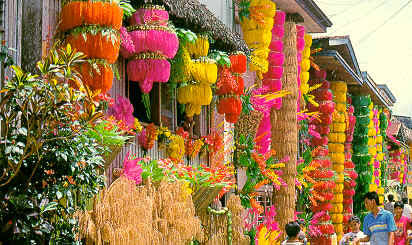
May 15 is when the locals of Lucban decorate their houses extravagantly with vibrant and lively colours. Vegetables are hung as decorations because this festival celebrates the season of harvesting. People are allowed to bring their own basket and pick fresh vegetables from the walls, with no charge – happy fiesta and shopping at the same time!
Pintados-Kasadyaan Festival
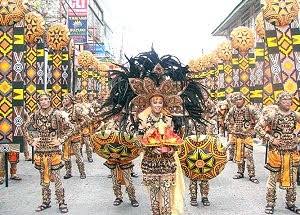
Pintados-Kasadyaan Festival is another religious celebration in the name of the Santo Niño held in Tacloban City. It showcases the rich culture and colourful history of the province of Leyte. The dancers paint their faces and bodies with vibrant colours of blue and green to depict Leyte’s ancestral people. Some dancers are also painted with designs that look like armour to represent the warriors that lived in Leyte long ago.
The folk dances they perform portray the many traditions people of Leyte practised before the Spanish era. Among these is the worship of idols, indigenous music, and epic stories, to name a few. The term, pintados, is derived from what the tattoed native warriors of Leyte were once called, while kasadayan means merriment in the Visayan tongue.
Sirong Festival
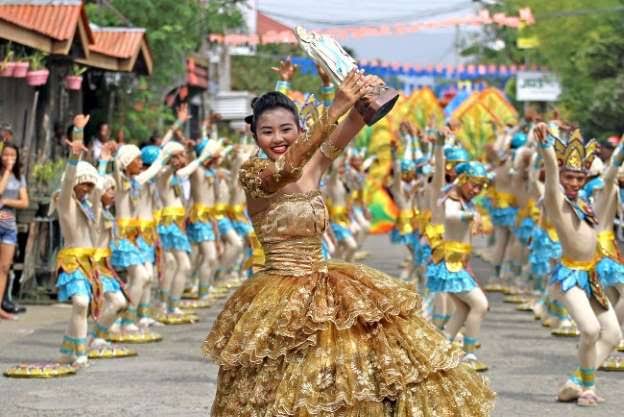
Sirong Festival is another cultural and religious celebration. Various towns claim that it originated in their municipalities in Surigao del Sur. Most of these towns were founded during the pre-Spanish occupation and were attacked by the Moros. Sirong Festival features a war dance between the Muslims and the Christians. It marks the Christianisation of the early Cantilangnons. Whoever wins the best dance in the festival brings home a cash prize.
Masskara Festival
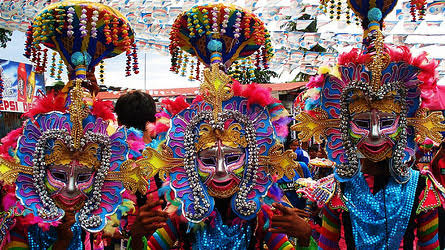
A festival that is celebrated from the city of smiles – Bacolod City. Mass (crowd) kara (face) Festival is filled with people wearing colourful smiling masks designed with feathers, flowers, and native beads. The festival allows tourists to enjoy 20 days of beer drinking, street dancing, and merrymaking. Every street is filled with locals wearing their smiling masks and festive costumes while dancing around and spreading the happy atmosphere throughout the city.
During the festival, locals are encouraged to forget the economic struggle brought about by the dead season of the sugar harvest. They also see the festival as their way of escapism and obscurantism. The sugar harvest is important to the people of Bacolod since Negros Occidental, where Bacolod is found, is known as the Sugar Bowl of the Philippines.
Giant Lantern Festival
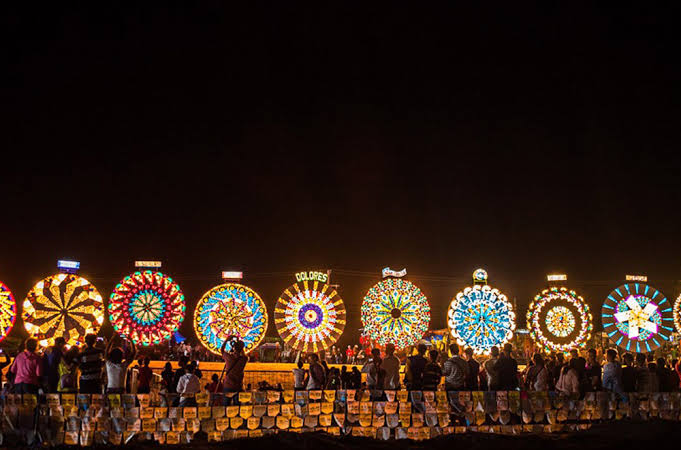
San Fernando organises the biggest festival in the country. It features a competition of giant lantern making, which is why it has been called the “Christmas Capital of the Philippines”. This is also to celebrate the Christmas season, where participants produce up to fifteen-foot diameter lanterns. It is a rule that each lantern should be made out of locally available materials. These lanterns are showcased in a parade in each barrio before the midnight mass on Christmas Eve.
This list is not even half of the notable festivals in the Philippines. There are plenty more to discover but the ones mentioned above should give you a great start. Make sure to go on the right date and month so as not to miss any of these awesome festivals.
 AdTravelTure